
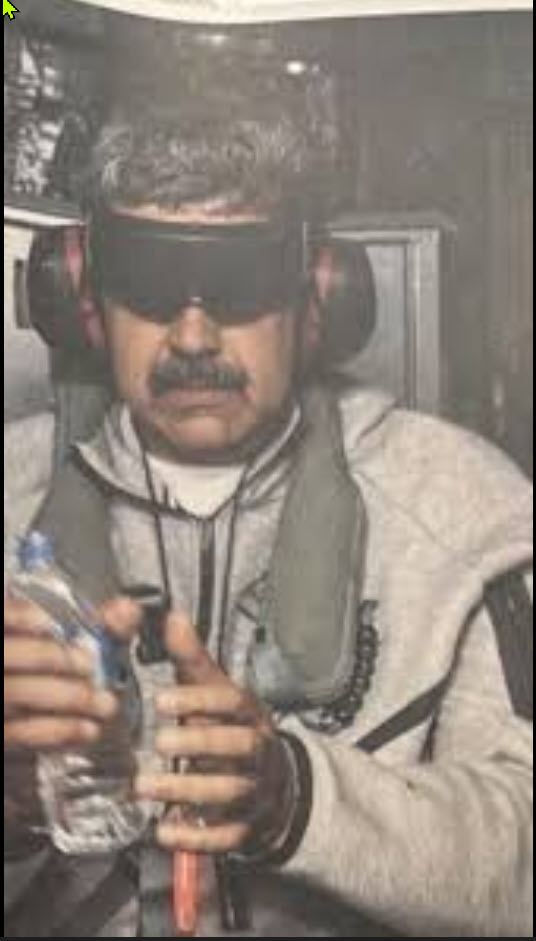
The recent extraction of Venezuelan President Nicolás Maduro and his wife may seem like a bold and unlawful act of aggression by the United States. However, it could be part of a larger strategy designed to enable oil companies to profit through the application of U.S. military power.
“The Miraflores Gambit,” below, is a story that explores the geopolitical theater behind a hypothetical removal of the Venezuelan president. It delves into the idea that a “forced” extraction might actually be a carefully choreographed exit strategy for a leader who needed to maintain his image of defiance while securing a peaceful retirement.
All the while allowing oil companies to move in and resume extraction of oil from the world’s largest reserve.
The following is how it may have happened.
The Miraflores Gambit
The humidity in Caracas was a physical weight, but inside the bunker of the Miraflores Palace, the air was filtered, chilled, and smelled faintly of expensive cigars and ozone. Nicolás sat at the head of a mahogany table that had seen the rise and fall of ideologies, staring at a satellite phone that shouldn’t have existed.
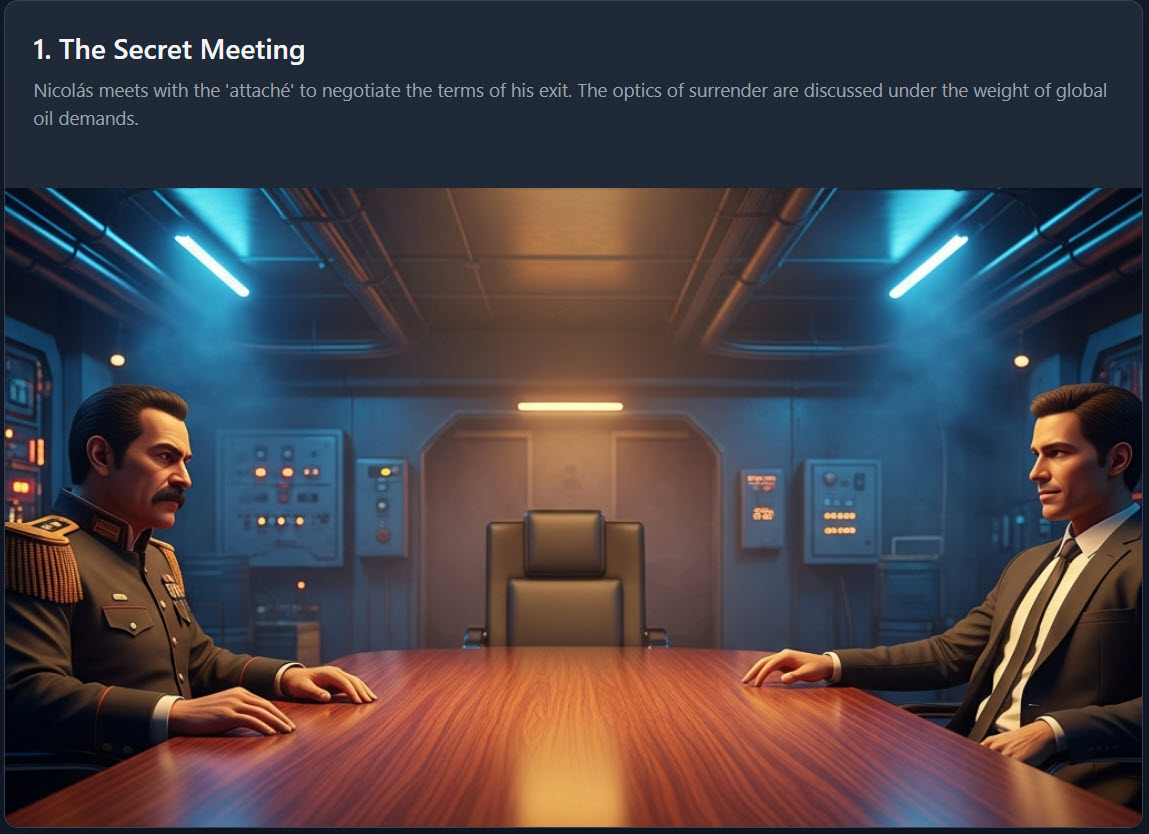
Opposite him sat a man in a tailored charcoal suit—an “attaché” from a neutral embassy whose accent was unmistakably Ivy League.
“The optics are the problem,” Nicolás said, his voice a low rumble. “If I sign the decree allowing Chevron and Exxon to return to the Orinoco belt on your terms, I am a puppet. The colectivos will tear the palace down before the ink is dry. A revolutionary cannot surrender to the Eagle.”
The attaché leaned forward, his hands folded. “We aren’t asking for a surrender, Mr. President. We’re asking for a performance. You’ve reached the ceiling of your utility. The oil needs to flow to stabilize the global north, and your people need bread. But we both know you can’t give us the oil while you’re standing in this room.”
“And if I leave?”
“Then you are a martyr in absentia,” the attaché smiled. “And martyrs don’t have to deal with logistics.”
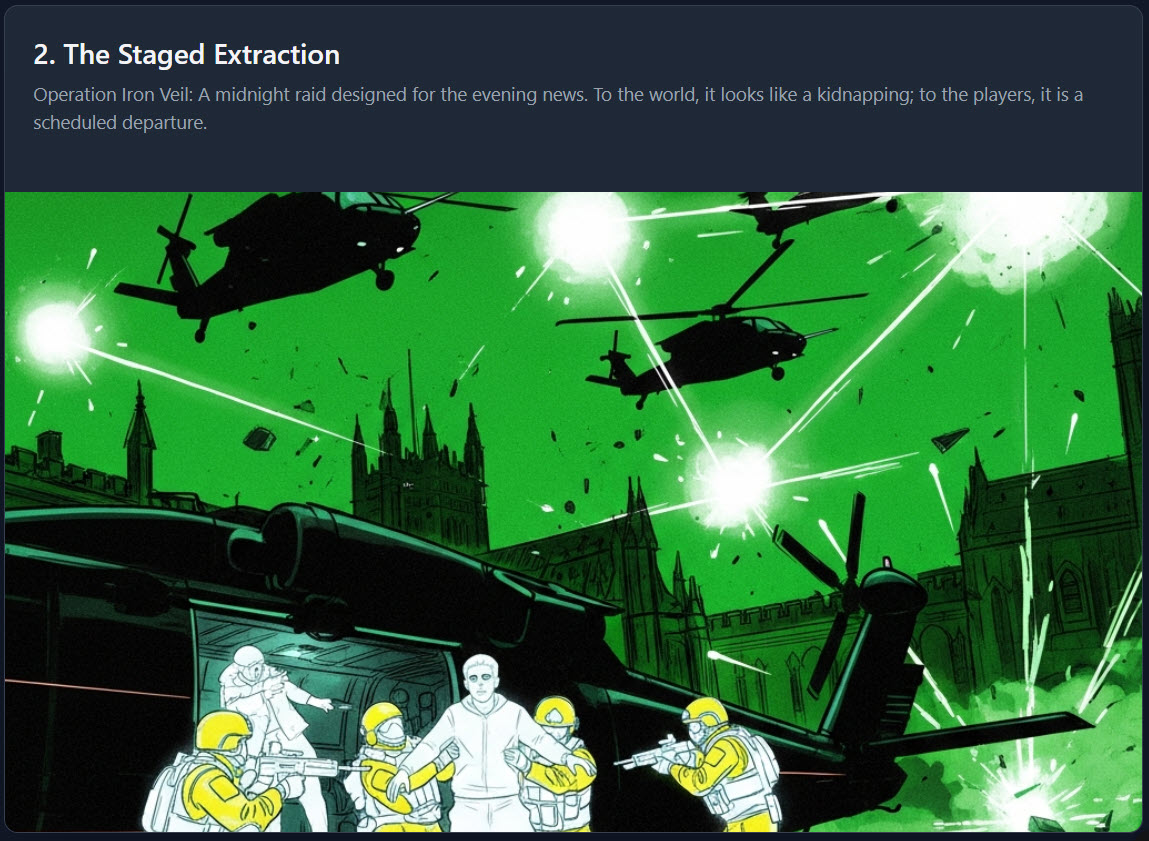
The plan was dubbed Operation Iron Veil. To the world, it would look like the ultimate violation of sovereignty: a midnight raid by JSOC forces, black helicopters screaming over the Caracas skyline, flashbangs, and the dramatic “extraction” of a dictator.
In reality, the script was tighter than a Hollywood thriller.
Three weeks later, the world woke up to blurry thermal footage of a man being bundled into a Seahawk. The Pentagon issued a terse statement about “restoring democratic order.” The Venezuelan Vice President, briefed only minutes before, went on state television to decry the “vile kidnapping” of their leader by the imperialist monster.
But while the streets of Caracas were filled with the smoke of protest and the confusion of a power vacuum, the transition was seamless. Within forty-eight hours, the “interim council”—vetted months prior in Panama—signed the emergency energy accords. The tankers, already idling in the Caribbean, began to move.
In a villa on the Amalfi Coast, Nicolás watched the news on a massive screen. He saw the “provisional government” welcoming the American engineers. He saw the pundits talking about the “bold US intervention” and the “shameful end of a strongman.”
He took a sip of a vintage Malbec and checked his balance in a Swiss account that didn’t technically belong to him.

“Look at them,” he muttered to his wife, gesturing at the TV. “They think I lost.”
She looked out over the Mediterranean, where the sun was setting in a bruise of purple and gold. “They needed you to be a victim so they could be the heroes. And you needed to be a victim so you wouldn’t have to be a failure.”
Back in Washington, the oil prices dipped. The President’s approval ratings soared. The narrative was perfect: the US had flexed its muscles, and the dictator had been removed by force.
It was the ultimate win-win. The oil flowed, the revolutionary brand remained untarnished by the “weakness” of negotiation, and the only thing lost was the truth—a small price to pay for a well-staged exit.
0 responses so far ↓
There are no comments yet...Kick things off by filling out the form below.
Leave a Comment